Dean Exotica Acoustic-Electric Guitar, KOA Wood Review
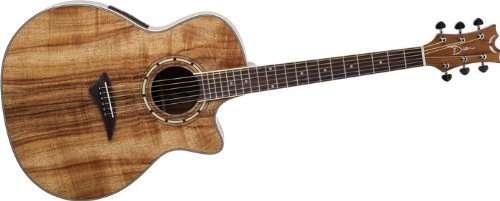

Dean Exotica Acoustic-Electric Guitar, KOA Wood Feature
- Koa top, sides and back
- Pickup system with built in tuner
- Rosewood fingerboard
- Sealed tuners
- Astonishing Finish

Dean Exotica Acoustic-Electric Guitar, KOA Wood Review
38" PURPLE Acoustic Guitar Starter Package (Guitar, Gig Bag, Strap, Pick, Free eBook and Mini Rubber Guitar & Pick) Review

Taylor Guitars GC7 Grand Concert Acoustic Guitar Review
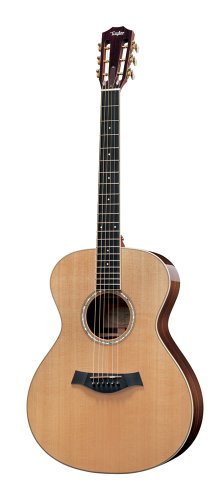
The GC7 is intimate and curvy yet with volume that belies its size. The slotted peghead and short-scale neck deliver a more "woody" tone and an unbelievably easy feel on the fretboard. A cedar top adds a mellow warmth to rosewood’s big, bold tone, while an elegant slotted peghead adds even more to the acoustic experience.
|
Taylor's Grand Concert Shape
Because of its smaller size, Taylor's Grand Concert traditionally has been a comfortable, "intimate" guitar--something to wrap oneself around. Its clarity, balanced response, scaled-down proportions, and scalloped bracing make it ideal for fingerstyle. Stage performers appreciate its body-friendly size and contours, and those who work in the recording studio love its controlled overtones. In 2000, Taylor re-designed the Grand Concert to bring it more in line with the other Bob Taylor originals, and then in 2004 they expanded its body depth by a quarter-inch and revoiced it to add volume and bass response giving it a tone that belies its size.
 Features Taylor's Grand Concert body shape. |
Classic Wood Combination
The top is made from western red cedar, which has been used for decades as a soundboard material on classical guitars. Cedar is a "soft" wood known for producing a "warm," mellow tone. Its overtones are evenly distributed, rather than concentrated on the highs and lows, making it especially suitable for fingerstyle playing. Cedars light brown color also lends a guitar a visual warmth that many players find appealing.
The back and sides are made from Indian rosewood, which is coveted by players and guitar builders alike for its dark, luxurious coloration that ranges from brown to purple to rose to black, and for tonal characteristics that include a strong bass response and long sustain. It remains the most popular tonewood used in the making of high-quality acoustic guitars.
In short, the distinctive blend of big leaf maple and sitka spruce gives the GC7 a bright, crystaline timbre with strong projection and warm overtones. It's a combination that truly "cuts through."
 Solid western red cedar top is joined with Indian rosewood back and sides for a bright, crystaline timbre with strong projection and warm overtones. |
Construction
Taylor takes pride in using the finest quality woods for their guitars, like ebony for every fretboard they make. The tone woods for the GC7 were quartersawn and carefully book-matched before being sorted, dried, and prepared by Bob Taylor and his experienced team of luthiers. The GC7 abalone inlay and binding work was also done by hand, providing care and "touch" that no machine can give. Taylor believes that precision matters, which is why they rely on laser cutters and computer-aided milling machines to consistently hit minute tolerances that were impossible a decade ago.
Balance and Bracing
A balanced tone is critical to a quality recorded sound. Guitars that are too heavily weighted towards a particular end of the tonal spectrum (too "bassy," for example) tend to be tougher to record. While the Dreadnought shape has more volume or bass than other shapes, the overall balance on the GC7 is not compromised.
 Features abalone dot inlays. |
Straight Necks Matter
Don't all guitars have straight necks? The answer is usually yes, but the real question is will they stay that way? Since its inception, the acoustic guitar had a major design flaw. The fretboard lacked sufficient support to remain truly straight because of top movement caused by changes in humidity. All guitars experience this phenomenon--often resulting in a slight bump at the 14th fret--but not all guitars respond to it in the same way.
Introduced in 1999 and a standard feature since 2001, the patented New Technology (NT) neck was designed by Bob Taylor and his team to accomplish the primary goal of building a straighter, more stable guitar neck. While some necks may bend in the face of humidity and other factors, the NT Neck stays stable and straight.
Adjustability is another major NT advantage. Since the NT Neck angle is created by spacers and requires no glue, adjustment simply requires a repair person with a new set of spacers and about five spare minutes. Altering the neck angle of a traditional neck assembly could require invasive surgery to remove wood and relocate the bridge.
The bottom line: The NT Neck on the GC7 means a stable, easy-to-adjust neck that stands up to the pressures all acoustic guitars face.
Tuners
Precise, gleaming tuners add appealing form to an important function, while the type of strings used can alter the feel and the tone of your guitar. Taylor pays careful attention to both, using tuners and strings that are optimized for the GC7 guitar. Together, they are among the keys to an easy-playing, incredible-sounding Taylor.
Taylor Guitars 200 Series 214-E-G Grand Auditorium Acoustic-Electric Guitar - Natural Review

Taylor Guitars Taylor Coffee Mug, Black- 13 oz Review

Taylor Guitars 214e, Grand Auditorium, Solid Sitka Spruce Top, Rosewood Back/Sides, ES-T, Left Review
 |
214e LFT Specs
|
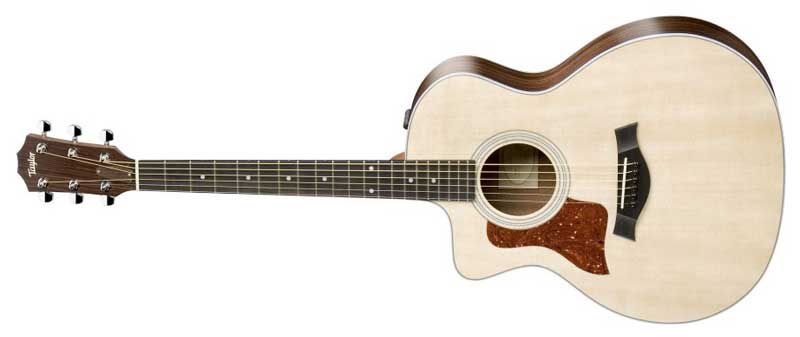
 Gorgeous Indian rosewood laminate back and sides. |
 Classic pearloid dot inlays. |
 ES-T pickup onboard. |
The Taylor 200 Series
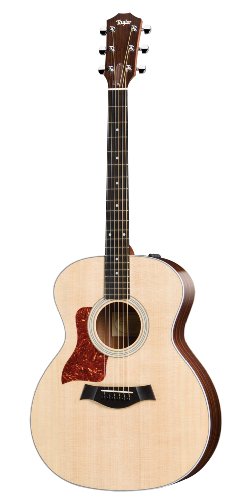
The 200 Series redefines what a mid-priced guitar can be. A satin, solid Sitka spruce top meets gorgeous Indian rosewood laminate back and sides, delivering the quality sound and feel you'd expect from a Taylor. Plug in with the optional Taylor electronics and take your performance to the stage with confidence.
Sitka Spruce Top
Sitka Spruce (Picea sitchensis) grows in a coastal "pocket" from Northern California to Alaska. This dense, straight-grained wood has the highest strength and elasticity-to-weight ratio among available tonewoods, an attribute that makes it an ideal material not only for our soundboards, but for our internal bracing, as well. Sitka produces a slightly brighter tone than does Engelmann.
Indian Rosewood Laminate Back/Sides
Indian Rosewood (Dalbergia latifolia) is coveted by players and guitar builders alike for its dark, luxurious coloration, which ranges from brown to purple to rose to black, and for tonal characteristics that include a strong bass response and long sustain. It remains the most popular tonewood used in the making of high-quality acoustic guitars.
Grand Auditorium Body Shape
The Grand Auditorium was the first guitar shape designed from scratch by Bob Taylor. It was unveiled to commemorate the company's 20th Anniversary in 1994, and since then it has more than lived up to its promise. Although the GA has the width and depth of a Dreadnought, its narrower waist gives it the appearance of a smaller instrument, adds treble "zing" across the guitar's tonal spectrum, sharpens the definition of individual notes, and also enables it to rest comfortably in the lap. Because we remove mass from the width of the GA's braces, the guitar top moves faster, resulting in a snappy, bell-like tone. The GA, available as a 6- or 12-sting, is designed to be a strong fingerpicking guitar that also can handle medium strumming, and is exceptionally versatile.
ES-T Pickup
Inspired by Taylor's Expression System technology, the Expression System Transducer, or ES-T, is a single-source, under-saddle transducer with individual elements for each string. (The ES-T was originally called the ES Element, but the name was changed to avoid confusion with another product.) The ES-T has an onboard preamp and the same active controls found on the full Expression System. Featuring a custom-voiced EQ and dynamic response, the system is powered by a 9-volt battery, with a battery life LED power indicator (which is lit when the battery is being used). The pickup also has a Phase switch for feedback control, which is located on the preamp board inside the soundhole.
Chrome-Plate Tuners
Taylor Tuners continue the industry-leading 18:1 gear ratio that they've been using, yet yield even greater precision with the help of a manufacturing process that employs the same gear-cutting machines used by Swiss watchmakers. The more precisely-machined gears virtually eliminate the slight "slop", or slack, typical among tuners, which makes it even easier for Taylor owners to get--and stay--in tune. Taylor Tuners also feature an elegant aesthetic touch, with the Taylor logo cleanly etched on the back.
Taylor Guitars Web/Suede Strap, Black/2 Clr Logo Review

Taylor Guitars 310ce Dreadnought Acoustic Electric Guitar Review

The 310ce a true performer's workhorse, combining technology and craftsmanship with understated style. A Venetian cutaway adds dimension to classic Dreadnought styling, while the tone of Sapele is faithfully amplified via the Taylor Expression System. Crisp, black binding flanks the satin-finish Sapele back and sides and glossy Sitka spruce top, and then continues up the fretboard.
|
Taylor's Dreadnought
The original Dreadnought acoustic guitar appeared early in the 20th Century, and its no-frills, no-nonsense shape made it a logical namesake of the huge battleships of that day. Most subsequent Dreadnoughts, including Taylor's, have been derivative of that early design. In 1997, however, Bob Taylor re-designed the Taylor Dreadnought by softening the curves at the top and bottom and generally refining its overall shape. In 2003, gloss-finish Dreadnoughts also underwent bracing refinements that substantially increased their overall volume and bass response, without sacrificing Taylor's signature balance and clarity. Dreadnought six-strings shine as "plectrum" or "rhythm" guitars because they respond well to flatpicking or light-to-heavy strumming.
A Venitian cutaway in the 310ce Dreadnought body allows better access to the upper frets. In the past, many players moving to acoustic guitars grew accustomed to the cutaways on their electric guitars, while others simply like the freedom of movement into the upper register that a cutaway allows. Now, cutaways are favored as much for their decorative appeal as for their function.
 Features ebony wood fretboard and bridge and Venetian cutaway. |
Rings Bright and Clear
The top is made from Sitka Spruce, a dense, straight-grained wood that has the highest strength and elasticity-to-weight ratio among available tonewoods. It's these attributes that make Sitka Spruce an ideal material not only for soundboards, but also for internal bracing. The Sitka top will produce a tone slightly brighter tone than Engelmann Spruce.
The back and sides of the 310ce are made from the mahogany-like sapele wood, which has gained a legion of fans ever since Taylor introduced it in 1998. As a tonewood, it's denser and harder than mahogany, so it has a crisper, clearer, brighter, "pop"-ier sound than its more familiar counterpart. Loud and robust, with a lovely ribboned grain, sapele has been used by Spanish guitar makers for many years.
 The Taylor Expression System gives you a natural acoustic sound. |
Pure Reproduction of An Acoustic Sound
In the past, Taylor had relied on after-market pickups that employed traditional piezo technology. But the result was a distorted tone that failed to capture the natural acoustic richness and dynamics of a Taylor for live performance. After several years of research, Taylor designed their own groundbreaking pickup system that uses magnetics much like a microphone. The result is an exceptionally pure reproduction of an acoustic guitars natural sound. The Taylor Expression System delivers an amplified tone that will satisfy the most demanding pro player, yet makes it simple for anyone to plug in and sound great.
The Expression System incorporates three different magnetic sensors. Two strategically placed Dynamic Body Sensors affixed to the underside of the soundboard capture the complex nuances of the tops vibration, while a Dynamic String Sensor mounted beneath the fretboard extension registers string and neck vibration. The preamp boosts the pickup signal cleanly, without the need for artificial EQ "coloration." The balanced, low-impedance signal the Expression System produces can run direct into a mixer or PA in most situations, and is free of distortion at almost any volume.
Three simple, unintrusive onboard control knobs preserve the aesthetic beauty of your Taylor, yet allow you to easily adjust the volume, bass, and treble to suit your personal preferences and performance environment. When set flat, the tone controls add no color and produce the most natural sound. Or, add bass or treble (or subtract) to adjust for the room or personal tastes. The payoff is in the purity of high-fidelity amplified tone, unprecedented dynamic range, and extraordinary resistance to feedback and distortion. It enables all of the expressive subtleties of your playing to come through, just the way you intended.
 Solid sitka spruce top is joined with sapele sides and back for a crisp and bright sound. |
Construction
Taylor takes pride in using the finest quality woods for their guitars, like ebony for every fretboard they make. The tone woods for the 310ce were quartersawn and carefully book-matched before being sorted, dried, and prepared by Bob Taylor and his experienced team of luthiers. The 310ce pearl inlay and binding work was also done by hand, providing care and "touch" that no machine can give. Taylor believes that precision matters, which is why they rely on laser cutters and computer-aided milling machines to consistently hit minute tolerances that were impossible a decade ago.
Balance and Bracing
A balanced tone is critical to a quality recorded sound. Guitars that are too heavily weighted towards a particular end of the tonal spectrum (too "bassy," for example) tend to be tougher to record. While the Dreadnought shape has more volume or bass than other shapes, the overall balance on the 310ce is not compromised.
 Features large pearl dot inlays. |
Straight Necks Matter
Don't all guitars have straight necks? The answer is usually yes, but the real question is will they stay that way? Since its inception, the acoustic guitar had a major design flaw. The fretboard lacked sufficient support to remain truly straight because of top movement caused by changes in humidity. All guitars experience this phenomenon--often resulting in a slight bump at the 14th fret--but not all guitars respond to it in the same way.
Introduced in 1999 and a standard feature since 2001, the patented New Technology (NT) neck was designed by Bob Taylor and his team to accomplish the primary goal of building a straighter, more stable guitar neck. While some necks may bend in the face of humidity and other factors, the NT Neck stays stable and straight.
Adjustability is another major NT advantage. Since the NT Neck angle is created by spacers and requires no glue, adjustment simply requires a repair person with a new set of spacers and about five spare minutes. Altering the neck angle of a traditional neck assembly could require invasive surgery to remove wood and relocate the bridge.
The bottom line: The NT Neck on the 310ce means a stable, easy-to-adjust neck that stands up to the pressures all acoustic guitars face.
Tuners
Precise, gleaming tuners add appealing form to an important function, while the type of strings used can alter the feel and the tone of your guitar. Taylor pays careful attention to both, using tuners and strings that are optimized for the 310ce guitar. Together, they are among the keys to an easy-playing, incredible-sounding Taylor.
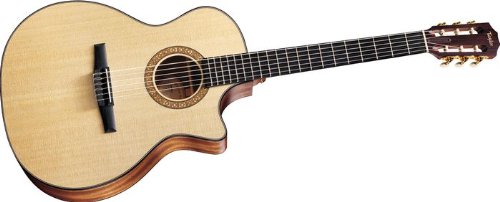
Taylor Guitars NS34-CE Grand Auditorium Acoustic Electric Classical Guitar Review
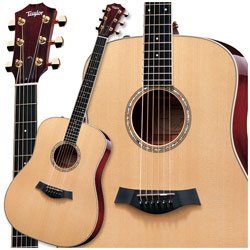
Taylor Guitars DN5 Dreadnought Acoustic Guitar Review
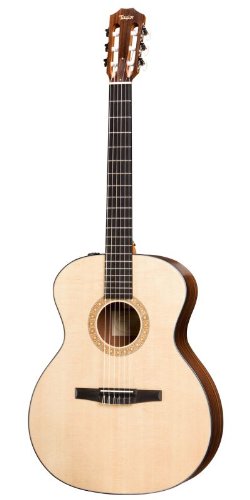
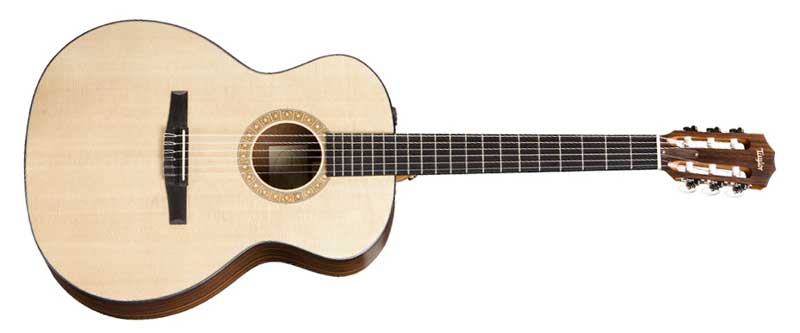
Taylor Guitars, NS24e, Nylon, Grand Auditorium, Indian Rosewood Back/Sides, Solid Sitka Spruce Top, ES-T Review
 |
NS24e Specs
|
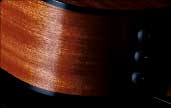 ES-T pickup onboard. |
 Satin finished top, back and sides. |
 Mexican Cypress rosette. |
Taylor Nylon-Strings
Taylor's take on the classical guitar sound is a nylon-string with a bit of twist. Think of it as classical tone meets Taylor playability, beginning with a slim and fast 1 7/8-inch neck. Available in sapele, ovangkol, maple, and Indian rosewood--in either a Grand Concert or Grand Auditorium body. Explore a new tone from Taylor.
Sitka Spruce Top
Sitka Spruce (Picea sitchensis) grows in a coastal "pocket" from Northern California to Alaska. This dense, straight-grained wood has the highest strength and elasticity-to-weight ratio among available tonewoods, an attribute that makes it an ideal material not only for our soundboards, but for our internal bracing, as well. Sitka produces a slightly brighter tone than does Engelmann.
Indian Rosewood Laminate Back/Sides
Indian Rosewood (Dalbergia latifolia) is coveted by players and guitar builders alike for its dark, luxurious coloration, which ranges from brown to purple to rose to black, and for tonal characteristics that include a strong bass response and long sustain. It remains the most popular tonewood used in the making of high-quality acoustic guitars.
Grand Auditorium Body Shape
The Grand Auditorium was the first guitar shape designed from scratch by Bob Taylor. It was unveiled to commemorate the company's 20th Anniversary in 1994, and since then it has more than lived up to its promise. Although the GA has the width and depth of a Dreadnought, its narrower waist gives it the appearance of a smaller instrument, adds treble "zing" across the guitar's tonal spectrum, sharpens the definition of individual notes, and also enables it to rest comfortably in the lap. Because we remove mass from the width of the GA's braces, the guitar top moves faster, resulting in a snappy, bell-like tone. The GA, available as a 6- or 12-sting, is designed to be a strong fingerpicking guitar that also can handle medium strumming, and is exceptionally versatile.
ES-T Pickup
Inspired by Taylor's Expression System technology, the Expression System Transducer, or ES-T, is a single-source, under-saddle transducer with individual elements for each string. (The ES-T was originally called the ES Element, but the name was changed to avoid confusion with another product.) The ES-T has an onboard preamp and the same active controls found on the full Expression System. Featuring a custom-voiced EQ and dynamic response, the system is powered by a 9-volt battery, with a battery life LED power indicator (which is lit when the battery is being used). The pickup also has a Phase switch for feedback control, which is located on the preamp board inside the soundhole.
Our first non-cutaway NS Grand Auditorium honors the more traditional classical body aesthetic, yet includes modern amenities like a sleek Taylor neck and our ES-T® under-saddle pickup.


